
NJ Property Tax Relief for Seniors 2026: Stay NJ, Senior Freeze & ANCHOR Explained
What’s in This Guide
If you own a home in New Jersey and you’re 65 or older, there is a very good chance you are leaving thousands of dollars on the table every single year. Let’s talk about NJ property tax relief.
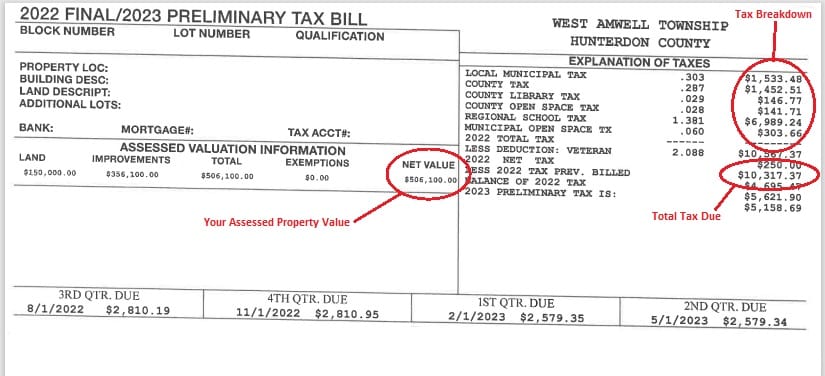
New Jersey has the highest property taxes in the country. The average homeowner paid over $9,400 in 2024 – and in many counties, bills regularly exceed $14,000 to $18,000 annually. For seniors living on fixed incomes, that number isn’t just uncomfortable. For many, it’s the reason they feel forced to leave homes they’ve lived in for decades.
But here’s what most people don’t realize: the state has responded. In 2026, New Jersey launched its most ambitious senior property tax relief initiative ever – three programs that work together, accessible through a single application, with a potential benefit of up to $6,500 per year.
The programs exist. Most of the people who qualify for them haven’t applied.
This guide covers everything: what the programs are, how they work together, who qualifies, exactly how to apply, and what to do if the relief programs still aren’t enough to make staying in your home the right decision.

Why NJ Property Taxes Got So Bad – and What Changed
The Problem in Plain Numbers
New Jersey’s property tax crisis didn’t happen overnight. For decades, the state’s heavy reliance on local property taxes to fund public schools, municipal services, and county government created a structural problem: taxes kept climbing year after year, with virtually no relief for the people least able to absorb the increases – seniors on fixed incomes.
The result was predictable. New Jersey consistently ranked dead last in national surveys of property tax burden. For the eighth consecutive year, more residents moved out of New Jersey than any other state. Among those leaving: a disproportionate number of retirees, priced out of homes they’d owned for 20, 30, even 40 years.
The Political Response: A Historic Overhaul
In 2024, the New Jersey Legislature passed the Stay NJ Act, signed into law by Governor Murphy. It became effective January 1, 2026, and applies to the 2025 tax year. The law didn’t just create a new program – it restructured how the state delivers property tax relief to seniors entirely, integrating three separate programs into a single, coordinated system.
For the first time, NJ homeowners and renters 65 and older could apply for Senior Freeze, ANCHOR, and Stay NJ all at once using a single form: the PAS-1. The state calculates eligibility and awards the maximum benefit automatically – no need to figure it out yourself.
“I was proud to author Stay NJ, which will enable more seniors to be able to continue to live in their homes, close to family and friends.” – NJ Assembly Speaker Craig J. Coughlin
The 2026 State Budget allocated $4.3 billion in total property tax relief – a record figure, and a direct acknowledgment that the previous approach wasn’t working.
The Three Programs Explained
Think of the three programs as layers of relief that stack on top of each other. The state applies them in a specific order, and the combination is designed so that eligible seniors receive close to – or exactly – 50% of their annual tax bill back.
Program 1: The Senior Freeze (Property Tax Reimbursement)
The Senior Freeze has existed in some form for years, but it was significantly updated in 2025–2026. Despite the name, it doesn’t freeze your bill at its current amount. What it does is reimburse you for any increase above the amount you paid in your “base year” – the first year you qualified for the program.
Example: Your base year taxes were $7,200. This year your bill is $8,400. The Senior Freeze sends you a check for the $1,200 difference.
- Age 65 or older, or receiving Social Security/Railroad Retirement disability benefits
- New Jersey resident for at least 10 consecutive years (or 3 years if receiving disability)
- Owned and occupied your home as your primary residence for at least the last 3 years
- Total annual income must be $172,475 or less for tax year 2025
- You no longer need to provide proof of property taxes paid – a significant simplification
Senior Freeze payments begin issuing on July 15, 2026 on a rolling schedule. The sooner you apply, the sooner you receive your check.
Program 2: ANCHOR (Affordable NJ Communities for Homeowners and Renters)
ANCHOR replaced the old Homestead Benefit program and dramatically expanded eligibility and benefit amounts. It’s the only one of the three programs that covers both homeowners and renters.
- Homeowners: Must have owned and occupied your NJ primary home on October 1, 2025. Gross income must be $250,000 or less. Benefits start at $1,000.
- Renters: Must have rented your NJ primary residence on October 1, 2025. Gross income must be $150,000 or less. Benefits start at $450.
ANCHOR payments begin issuing on September 15, 2026 and continue on a rolling basis. Most applicants receive payment within 90 days of the state completing its review.
Program 3: Stay NJ – The New Program That Changes Everything
Stay NJ is the headline program, and it’s the reason this guide exists. Launched in 2026 as part of the amended Stay NJ Act, it fills the gap left by Senior Freeze and ANCHOR – bringing total relief as close as possible to 50% of a senior’s total annual property tax bill.
- Reimburses 50% of your property tax bill, up to a maximum of $13,000
- Benefit cap: $6,500 per year
- Paid in quarterly installments (not a lump sum) – scheduled for February, May, August, and November 2026 for the 2024 tax year
- Stay NJ fills the gap after your Senior Freeze and ANCHOR benefits are calculated
- Must be age 65 or older in the application year (Social Security disability status alone does not qualify)
- Must have owned and lived in your NJ home as primary residence for the full 12 months of 2025
- Annual income must be under $500,000
- Mobile homeowners are not eligible for Stay NJ (though they may qualify for Senior Freeze and ANCHOR)
| Annual Property Tax Bill | 50% Target | Senior Freeze + ANCHOR (est.) | Stay NJ Fills the Gap | Total Annual Relief |
|---|---|---|---|---|
| $8,000 | $4,000 | $2,000 | $2,000 | $4,000 |
| $10,000 | $5,000 | $2,500 | $2,500 | $5,000 |
| $12,000 | $6,000 | $3,000 | $3,000 | $6,000 |
| $13,000+ | $6,500 | $3,500 | $3,000 | $6,500 (max) |
* Illustrative estimates only. Actual benefits depend on individual income, base year amounts, and annual state budget appropriations. Source: NJ Division of Taxation
Watch: Stay NJ Program Overview
The NJ Division of Taxation has published official guidance on how the Stay NJ program works. The video below provides a helpful overview from a reputable source – watch it before filling out your application.
The PAS-1: One Application for All Three Programs
Before 2025, claiming all three programs required filing three completely separate applications – each with its own form, its own deadline, and its own documentation requirements. Seniors missed thousands in benefits simply because the process was too confusing.
That changed. The PAS-1 combined application replaced all three separate forms. You submit once. The state reviews your information and automatically calculates the maximum benefit you’re entitled to across all three programs. You receive a determination letter in autumn that breaks down exactly what you’ll receive from each program.
Step-by-Step: How to Apply for NJ Property Tax Relief in 2026
- Confirm Your Eligibility Are you 65 or older (or receiving Social Security/Railroad Retirement disability benefits)? Did you own and occupy your NJ home as your primary residence on October 1, 2025? Was your 2025 gross income under $500,000? If yes to all three, file the PAS-1.
- Gather What You Need Your 2025 NJ gross income figure (from your NJ-1040 or income sources). Your property’s Block, Lot, and Qualifier numbers (on your property tax bill). A valid government-issued ID. If applying online, create an ID.me account in advance – driver’s license, state ID, passport card, or passport required.
- Choose How to File Online: propertytaxreliefapp.nj.gov (requires ID.me verification) · By mail: Complete the blue PAS-1 booklet and return in the prepaid envelope · In person: Visit any NJ Division of Taxation Regional Information Center – staff will walk you through it at no charge.
- Submit Before November 2, 2026 This is a hard deadline. Don’t wait – applications are processed on a rolling basis, and earlier submissions receive benefits sooner. Senior Freeze payments begin July 15. ANCHOR payments begin September 15. Stay NJ quarterly payments run February, May, August, and November.
- Watch for Your Determination Letter In autumn 2026, the state will send you a letter detailing exactly what you qualify for under each program – with specific dollar amounts. Keep this letter. If you disagree with your determination, you have the right to appeal.
- Check Your Application Status You can check the status of your Senior Freeze application online via the NJ Treasury portal, or call the Senior Freeze dedicated hotline at 1-800-882-6597. For general property tax relief questions, call 1-888-238-1233, Monday–Friday 8:30 AM–4:30 PM.
Watch: How to Fill Out the PAS-1 Form
The NJ Senior Council – a non-partisan senior advocacy organization based in New Jersey – published a step-by-step video walking seniors through exactly how to complete the PAS-1 form. This is one of the most practical resources available for first-time applicants.
Other NJ Property Tax Relief Programs Worth Knowing
Beyond the PAS-1 programs, NJ seniors have access to additional relief that many never claim. These apply at the local level and often require a separate, simple request to your town.
Annual $250 Senior Citizens Property Tax Deduction
A $250 annual deduction applied directly to your local property tax bill – meaning it reduces what you owe before any other program calculates your benefit. To qualify: age 65+, NJ resident, homeowner, and annual income of $10,000 or less (not including Social Security). Applied at the municipal level – contact your local tax collector to ensure it’s already on your account. Many eligible seniors never receive it simply because no one told them to ask.
NJ Income Tax Property Tax Deduction
Built directly into your NJ-1040 state income tax return. Allows you to deduct up to $15,000 of property taxes paid – or 18% of annual rent paid – from your NJ taxable income. This applies to both homeowners and renters and is automatically available when you file your state return.
Veterans Property Tax Relief
NJ veterans and surviving spouses of veterans may qualify for a $250 annual deduction on their property tax bill. Veterans with a 100% service-connected disability may qualify for a complete property tax exemption. Contact your county veterans service officer or local tax assessor to apply.
When Relief Isn’t Enough: An Honest Conversation
The programs described in this guide were designed to help seniors stay in their homes – and for many people, that’s exactly the right outcome. If the relief programs bring your annual tax burden to a manageable level, applying for them is a no-brainer.
But let’s do some honest math.
Even at the maximum Stay NJ benefit of $6,500, a homeowner paying $14,000 a year in property taxes is still paying $7,500 out of pocket. On a fixed income, that’s $625 every single month. Add homeowner’s insurance, maintenance, utilities, and repairs – and for many seniors, the numbers simply don’t work anymore.
For those homeowners, the right answer isn’t necessarily staying. It might be selling – on your terms, quickly, without the hassle of a traditional listing.
Many of the NJ seniors I work with have built $200,000, $300,000, or more in equity over the decades. That equity can fund a move closer to family, eliminate a mortgage in retirement, or simply provide financial security they haven’t had in years. A cash home sale makes that possible – without repairs, without showings, without waiting.
If you’ve been wondering whether staying or selling makes more financial sense for your situation – I’m happy to walk through it with you. No sales pitch. No obligation. Just a real conversation and an honest answer.
Whether you’re a long-time NJ homeowner exploring all your options, dealing with an inherited property, facing foreclosure, or simply ready to simplify – we’ve helped hundreds of homeowners across New Jersey sell quickly and walk away with cash in hand . The process is straightforward:
- Submit your information at IWillBuyYourHouseForCash.com
- Receive a no-obligation cash offer within 24 hours
- Choose your closing date – as fast as 7 days, or as far out as you need
- Walk away with cash – no repairs, no cleaning, no agent fees
Key Links & Contact Information
All official sources used in this guide. Bookmark these for easy reference.
| Resource | Link / Contact | Use For |
|---|---|---|
| Official Stay NJ Program Page | nj.gov/treasury/taxation/staynj | Official eligibility rules & deadlines |
| PAS-1 Online Application | propertytaxreliefapp.nj.gov | File your application online |
| Full NJ Property Tax Relief Hub | nj.gov/treasury/taxation/relief.shtml | All programs in one place |
| Senior Freeze Hotline | 1-800-882-6597 | Check application status; ask questions |
| General Property Tax Relief Hotline | 1-888-238-1233 | M–F 8:30 AM – 4:30 PM |
| Kiplinger NJ Tax Programs Guide | kiplinger.com | Third-party overview (updated Feb. 2026) |
| NJ Senior Council – PAS-1 Video & Handout | njseniorcouncil.com/advocacy.html | PAS-1 video tutorial; printable handout |
| IWillBuyYourHouseForCash.com | Get a Free Cash Offer | If selling makes more sense than staying |
Frequently Asked Questions
Yes. All three can be claimed on a single PAS-1 application, and the state is designed to layer them. Senior Freeze and ANCHOR are calculated first. If your combined benefit from those two programs is less than 50% of your property taxes, Stay NJ fills the remaining gap – up to the $6,500 cap. You don’t need to calculate anything yourself; the state does it automatically.
Stay NJ eligibility requires that you owned and occupied your home as your primary residence for the full 12 months of the qualifying tax year. If you sell mid-year, you will generally not qualify for that year’s Stay NJ benefit. However, the equity from selling your home as-is can significantly outweigh annual relief payments – particularly if you’ve built substantial equity over many years. It’s worth running both scenarios before making a decision.
Yes. Surviving spouses and civil union partners who meet the age, residency, and income requirements are fully eligible to apply. If your spouse previously had a Senior Freeze “base year” established, that base year should be preserved as long as you continue to occupy the same home. Contact the Division of Taxation at 1-800-882-6597 if you have questions about how your specific situation carries over.
The 2024 application deadline has passed. However, the 2025 application – covering the 2025 tax year – is currently open, with a deadline of November 2, 2026. File the PAS-1 now to begin receiving benefits in the 2026-2027 cycle.
Property tax relief payments from these programs may be considered taxable income depending on your specific situation. The state will issue the appropriate tax documentation. Consult a qualified tax professional or CPA for advice specific to your circumstances, particularly if you are on Medicare and concerned about IRMAA income thresholds.
Co-op residents may qualify for ANCHOR as a renter if their unit is subject to local property taxes. Co-op residents should review the specific instructions in the PAS-1 booklet regarding their occupancy type before filing. Contact the Division of Taxation directly if you’re unsure how your specific arrangement qualifies.
Your base year is the first year you qualified for and received the Senior Freeze benefit. It establishes the property tax amount that the state uses to calculate future reimbursements – any increase above that base year amount gets reimbursed each year. If you’re a returning Senior Freeze applicant, your base year will be pre-printed on line 13 of your PAS-1 form. First-time applicants will establish their base year in their first qualifying year.
Sometimes staying is the right answer, especially once the relief programs are applied. Other times, the equity you’ve built means selling your home quickly for cash makes significantly more financial sense – eliminating the tax burden entirely and freeing up the equity you’ve spent decades building. We’re happy to walk through the numbers with you, no pressure and no obligation.
